Showing posts with label Opthalmology. Show all posts

Sunday, October 2, 2011

Peripheral Ocular Fundus 3rd ed. 2007


Well organized and comprehensive, this text is richly illustrated with full-color photographs to assist with diagnosis and treatment of disorders of the peripheral ocular fundus. It covers developmental anomalies of the peripheral retina, ora serrata, and pars plana, with emphasis placed on degeneration and anomalies of the retina and vitreous which have the potential for producing a retinal break or detachment.
  • Each condition includes a clinical description, histopathology, clinical significance, and brief discussions of treatment.
  • Features Optomap images from the Panoramic200, which allow a full view of the peripheral retina rather than a partial view.
  • Includes images taken with the more traditional condensing lens.
  • Presents updated and expanded treatment descriptions for each of the clinical conditions.
  • Features a more reader-friendly, full-color format, providing more clinical utility for the student and practitioner.
  • Contains updated references for further study and research.

dOWNLOAd .
part-1 
part-2 

Monday, September 19, 2011

Cornea 3rd ed. 2011


Cornea, edited by Drs. Krachmer, Mannis & Holland, is the only truly comprehensive clinical reference available that covers external disease, anterior uveitis, and the expanding range of contemporary corneal surgery. In this Third Edition, state-of-the-art coverage, 25 brand-new chapters, and 45 new videos provide expert guidance on performing femtosecond-assisted penetrating keratoplasty, DSAEK, deep anterior lamellar keratoplasty, and many other cutting-edge techniques. Plus, you'll have easy access to the complete contents and illustrations online at expertconsult.
  • Overcome any clinical challenge related to the cornea, external disease, anterior uveitis, and the expanding range of contemporary corneal surgery with the most complete, authoritative guidance source available.
  • Get superb visual guidance with exceptionally clear illustrations, diagnostic images, and step-by-step surgical photographs.
  • Access the complete contents and illustrations online at expertconsult.
  • Make optimal use of Anterior Segment OCT to plan and choose treatment options and assess post-operative recovery.
  • Master the latest surgical techniques-including femtosecond-assisted penetrating keratoplasty, DSAEK, and deep anterior lamellar keratoplasty-thanks to 25 brand-new chapters and 45 new videos on DVD (a total of 3 hours running time).
  • Understand the full spectrum of corneal diseases with coverage of the new corneal dystrophy classification that incoporates current genetic, clinical, and pathologic information.


dOWNLOAd .

Wednesday, March 2, 2011


As the first comprehensive reference for the eye, its support structures, diseases, and treatments, Encyclopedia of the Eye is an important resource for all visual scientists, ophthalmologists, and optometrists, as well as researchers in immunology, infectious disease, cell biology, neurobiology and related disciplines. This four-volume reference is unique in its coverage of information on all tissues important for vision, including the retina, cornea and lens. It also covers the physiological and pathophysiologic processes that affect all eye tissues.


This Encyclopedia is invaluable for graduate students and postdoctoral fellows who are seeking an introduction to an area of eye research. Each chapter explains the basic concepts and provides references to relevant chapters within the Encyclopedia and more detailed articles across the wider research literature. The Encyclopedia is also particularly useful for visual scientists and practitioners who are researching a new area, seeking deeper understanding of important research articles in fields adjacent to their own, or reviewing a grant outside their immediate area of expertise.

* Includes many full colour, high quality figures and images throughout, to clearly illustrate the complex processes underlying function

* Topics covered span the breadth of modern eye research

* Online edition includes multimedia files

* Each article written by a leading expert in the field

* Each article gives a clear overview of the field with references useful for in depth reading

* Easy to find related articles by extensive cross-referencing

* Current information that will be systematically updated

* Together with Darlene Dartt, Director of Scientific Affairs at Schepens Eye Institute, senior editors Reza Dana, Chair Opthalmology Harvard Medical School, and Joseph Besharse, Chair Department Cell Biology, Neurobiology and Anatomy, Medical College Wisconsin, are leading a team of section editors and authors including the crème de la crème in eye research 


Sunday, March 28, 2010

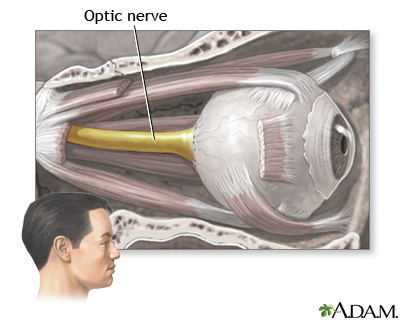
Optic Nerve Disorders: Diagnosis and Management (pdf)


The optic nerve and the brain comprise the main anatomic components of neuro-ophthalmology. Although there are numerous handbooks and major texts describing all the common disorders of neuro-ophthalmology, Optic Nerve Disorders is the only practical reference book focusing only on common optic nerve disorders. The author discusses diagnosis, pathophysiology, management, and prognosis of complex optic nerve disorders. Optic Nerve Disorders is organized by optic nerve diagnoses commonly encountered in a neuro-ophthalmologic practice. It is written in a clear, concise style for quick, easy reference in the clinic.


Neuro Opthalmology


All motor behavior is characterized by sensory inputs causing specific motor reactions. Because humans modify motor reactions voluntarily or through experience, this input-output relation is more complex in humans than in lower vertebrates. Eye movements provide a window on fundamental brain function, not only for topographic diagnosis of dysfunctions but also for the comprehension of normal brain function. This book highlights basic mechanical properties of eye movements, explains the neuronal basis of the vestibular-ocular reflex, saccadic eye movements, smooth-pursuit eye movements, and vergence eye movements, and deals with their pharmacological manipulation in disorders. Since precise measurement of motor reactions is essential for understanding the oculomotor system, one chapter critically discusses current registration methods, and another one considers the possibilities and limitations of modeling it by control theory methods. Its comprehensive characterization of eye movements and their relation to brain function makes this publication essential reading to ophthalmologists, neurologists, and clinical neuropsychologists.


LinkWithin

Related Posts Plugin for WordPress, Blogger...